







Last updated: August 6, 2026
Quick Answer: Disposable vapes should be stored between 4°C and 30°C (roughly 39°F to 86°F). Leaving them in a hot car in summer or a freezing vehicle during an Ontario winter can damage the lithium-ion battery, degrade the e-liquid, cause leaks, and in rare cases create a fire risk. The safest approach is to keep disposable vapes on your person or in a climate-controlled space rather than leaving them in a parked vehicle.
Key Takeaways
- Safe storage temperature range: 4°C to 30°C (39°F to 86°F), as recommended by the Ontario Cannabis Store and most device manufacturers.
- A parked car in direct sunlight can reach 60°C (140°F) or higher within an hour, far exceeding safe limits for lithium-ion batteries and e-liquid.
- Ontario winters regularly drop below -20°C (-4°F), which thickens e-liquid, drains batteries faster, and can crack plastic housings.
- Heat damage to a disposable vape is often permanent: swollen batteries, burnt coils, and degraded nicotine cannot be reversed.
- Cold-damaged vapes can sometimes recover if warmed gradually to room temperature, but repeated freeze-thaw cycles cause cumulative harm.
- Rapid temperature swings (hot car to cold air, or vice versa) create condensation inside the device, leading to leaks and electrical shorts.
- The safest in-car storage spot is an insulated bag or case in the glove compartment or center console, not the dashboard or trunk.
- Leaking e-liquid is the most common visible sign of temperature damage and can ruin upholstery or clothing.
- A vape that smells burnt, tastes off, or won’t fire after heat exposure should be disposed of safely, not used.
- Retailers storing inventory should keep stock in climate-controlled rooms, not in back-of-store areas near loading docks or windows.
What Happens to Disposable Vapes If Left in a Hot Car
Leaving a disposable vape in a hot car causes three types of damage at once: the lithium-ion battery overheats, the e-liquid thins and can leak, and the plastic or metal housing expands under thermal stress. In severe cases, a swollen battery can vent toxic gases or catch fire.
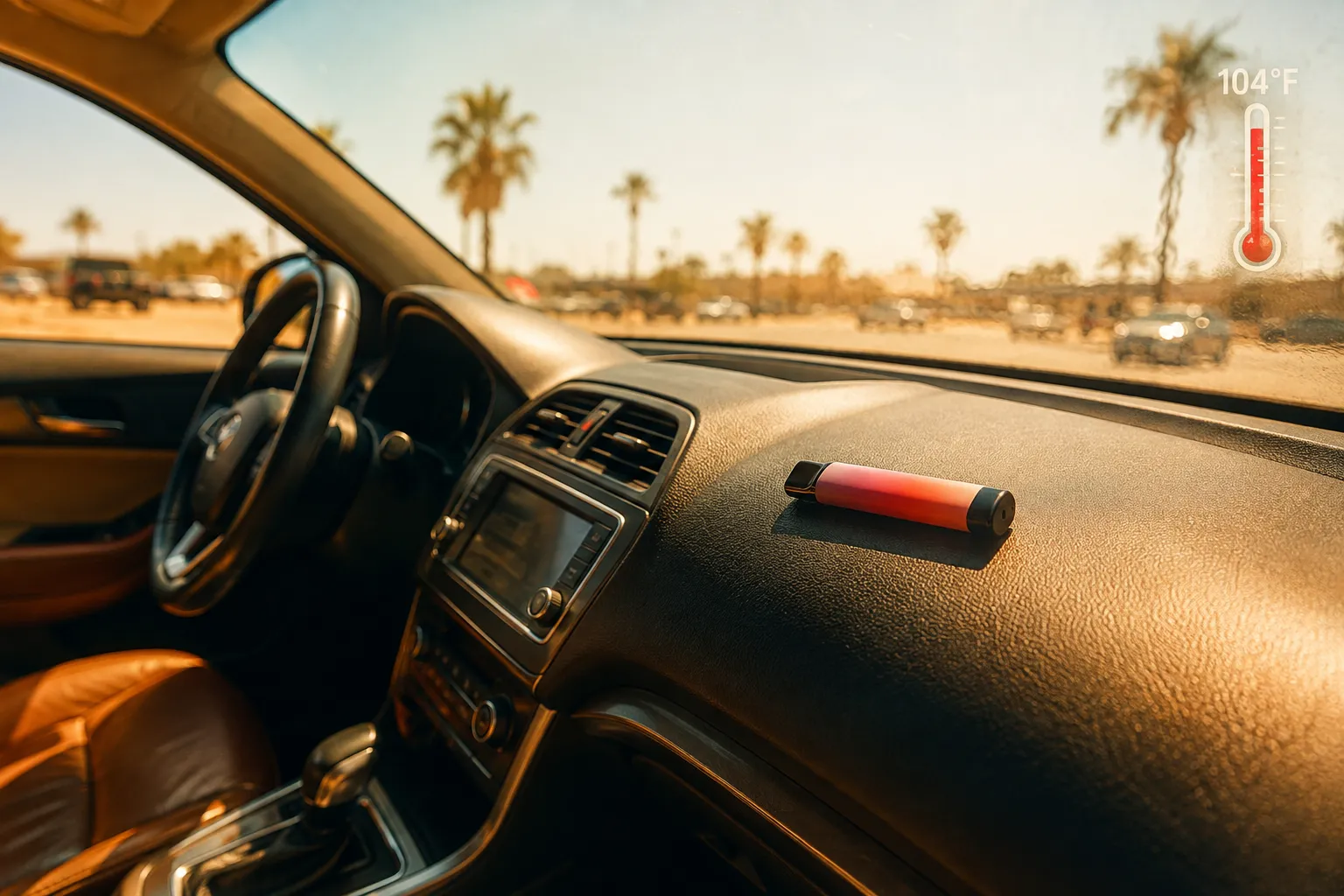
Here’s what happens step by step when temperatures climb:
- E-liquid thins out. Heat reduces the viscosity of vegetable glycerin (VG) and propylene glycol (PG), the base liquids in every disposable vape. Thinner liquid seeps through wicking material and leaks from the mouthpiece or airflow holes.
- Nicotine degrades. Nicotine breaks down faster at elevated temperatures. The result is a harsher, less satisfying draw and a noticeable change in flavor.
- The battery enters thermal stress. Lithium-ion cells are rated for specific operating and storage temperatures. Sustained heat above 45°C accelerates internal chemical reactions, reducing capacity and lifespan. Above 60°C, the risk of thermal runaway (uncontrolled overheating) increases significantly.
- Seals and adhesives soften. The glue and rubber gaskets holding a disposable vape together weaken in heat, making leaks more likely.
If you’re unfamiliar with how these components work together, the guide on how disposable vapes work: battery, coil, and e-liquid explained covers the basics.
Common mistake: Assuming a vape is fine because it still fires after sitting in a hot car. Internal damage to the battery or coil may not show symptoms immediately but can cause a burnt taste or sudden failure later. For more on that issue, see why some disposable vapes taste burnt and how to avoid it.
Can Heat Damage Disposable Vape Batteries
Yes. Heat is the single biggest threat to lithium-ion battery health. Disposable vapes use small lithium-ion or lithium-polymer cells, and these batteries are chemically sensitive to temperature extremes.
When a lithium-ion cell is stored above its rated maximum (typically around 45°C for storage, 60°C for short-term exposure), several things happen:
- Electrolyte decomposition speeds up, producing gas inside the sealed cell. This causes the battery to swell, sometimes visibly bulging the vape’s outer casing.
- Internal resistance increases, meaning the battery delivers less power and may fail to activate the heating coil.
- Capacity drops permanently. Even if the battery cools down, it won’t hold as much charge as it did before the heat exposure.
- Thermal runaway risk rises. In extreme cases, the internal temperature spirals out of control, leading to venting, smoke, or fire.
For a deeper look at lithium-ion risks specific to vapes, the article on disposable vape battery safety: lithium-ion risks and how to store devices is worth reading.
Decision rule: If a disposable vape feels unusually warm to the touch, looks swollen, or emits an unusual chemical smell after heat exposure, do not use it. Dispose of it at a hazardous waste drop-off. Ontario has specific guidelines for this, outlined in the guide on how to properly dispose of a disposable vape in Ontario.
How Hot Does a Car Get in Summer That Would Ruin a Vape
A parked car in direct sunlight can reach interior temperatures of 50°C to 70°C (122°F to 158°F) within 30 to 60 minutes, even when the outside air temperature is only 25°C to 30°C (77°F to 86°F). Dashboard surfaces can exceed 80°C (176°F).
Here’s a general reference for how quickly car interiors heat up on a moderately warm day:
| Outside Air Temperature | Car Interior After 30 Min | Car Interior After 60 Min | Dashboard Surface |
|---|---|---|---|
| 25°C (77°F) | ~42°C (108°F) | ~50°C (122°F) | ~65°C (149°F) |
| 30°C (86°F) | ~49°C (120°F) | ~58°C (136°F) | ~75°C (167°F) |
| 35°C (95°F) | ~55°C (131°F) | ~65°C (149°F) | ~82°C (180°F) |
These estimates are based on widely cited vehicle heat studies. Darker interiors, closed windows, and direct sun exposure push temperatures higher.
The takeaway: Even on a mild Ontario summer day of 25°C, the inside of a parked car can exceed the safe storage range for a disposable vape within half an hour. The dashboard is the worst possible location.
How Long Can a Disposable Vape Sit in Heat Before It Breaks
There is no single hard cutoff, but damage begins within 30 to 60 minutes in a car that reaches 50°C or higher. The hotter the environment and the longer the exposure, the worse the outcome.
- Under 45°C for a few hours: Likely no permanent damage, though e-liquid may thin and minor leaking can occur.
- 45°C to 55°C for one to two hours: Battery degradation begins. E-liquid viscosity drops noticeably. Flavor quality declines.
- Above 55°C for more than an hour: Expect permanent battery capacity loss, possible seal failure, and a high chance of leaking. The device may stop working entirely.
- Above 65°C for any length of time: Serious risk of battery swelling, venting, or thermal runaway. The vape should be considered unsafe.
Edge case: A vape stored in a trunk is slightly cooler than one on a dashboard, but trunks still reach dangerous temperatures in summer. The trunk is not a safe alternative for extended parking.
What Temperature Range Is Safe for Vape Storage
The recommended storage temperature for disposable vapes is 4°C to 30°C (39°F to 86°F). This range comes from the Ontario Cannabis Store’s published storage guidelines for vape devices and is consistent with lithium-ion battery manufacturer specifications.
Within this range:
- E-liquid maintains proper viscosity for consistent wicking and vapor production.
- The lithium-ion battery retains its charge and capacity without accelerated degradation.
- Seals, adhesives, and plastic components remain structurally sound.
- Nicotine and flavoring compounds stay stable.
Choose a storage spot if: it stays between 15°C and 25°C year-round, is dry, and is out of direct sunlight. A bedroom drawer, a kitchen cabinet away from the stove, or a climate-controlled storage room all work well.
Avoid storage spots if: they experience temperature swings (garages, sheds, car interiors), direct sunlight, or high humidity (bathrooms).
Best Way to Store Disposable Vapes in Winter in Ontario
Keep disposable vapes in an inside jacket pocket or a temperature-stable indoor location. Ontario winters regularly bring temperatures below -20°C (-4°F), and even brief exposure to these extremes affects performance and can cause physical damage.

Here’s a practical winter storage checklist:
- Carry it on your body. An inside coat pocket, close to body heat, keeps the vape between 20°C and 35°C even in deep cold.
- Never leave it in a parked car overnight. Overnight lows in Ontario cities like Ottawa, Sudbury, and Thunder Bay can drop below -30°C. At those temperatures, e-liquid can become too viscous to wick, and the battery may refuse to fire.
- Bring it indoors. If arriving at work, home, or a store, take the vape inside rather than leaving it in the vehicle.
- Use an insulated case. A small neoprene pouch or padded case adds a buffer against sudden temperature drops during short outdoor trips.
- Warm it gradually. If a vape has been exposed to cold, let it sit at room temperature for 10 to 15 minutes before using it. Do not use a hair dryer, microwave, or direct heat source.
For those who travel with vapes during Ontario winters, the article on travelling in Canada with disposable vapes covers airline and transport rules that also apply to cold-weather handling.
Do Disposable Vapes Work in Cold Weather
They can, but performance drops noticeably below 0°C. Cold weather thickens e-liquid, slows battery chemistry, and can make the draw feel weak or produce less vapor.
Specific cold-weather effects include:
- Thicker e-liquid. VG becomes significantly more viscous in cold temperatures. The wicking material can’t absorb liquid fast enough, leading to dry hits or a burnt taste.
- Reduced vapor production. The coil receives less e-liquid, so each puff produces thinner, less satisfying vapor.
- Sluggish battery response. Lithium-ion batteries deliver less current in cold conditions. The vape may take longer to activate or produce a noticeably weaker hit.
- Potential misfires. Some disposable vapes have draw-activated sensors that may not respond properly when the device is very cold.
Quick fix: Hold the vape in a closed fist for 30 to 60 seconds before taking a draw. Body heat is enough to warm the mouthpiece area and improve the first few puffs.
Does Cold Weather Drain a Disposable Vape Battery Faster
Yes, but the effect is temporary rather than permanent. Cold temperatures slow the chemical reactions inside a lithium-ion battery, which reduces its available voltage. The battery appears to drain faster because it can’t deliver its full charge at low temperatures.
Once the battery warms back up to room temperature, much of that “lost” capacity returns. However, there are limits:
- Repeated deep cold exposure (below -20°C) can cause minor permanent capacity loss over time.
- If the battery voltage drops low enough in the cold, the vape’s protection circuit may shut it off entirely, making it seem dead.
- Using a vape aggressively in cold weather (rapid, frequent puffs) stresses the battery more than occasional use.
Compared to heat damage: Cold-related battery issues are generally reversible. Heat damage is not. A vape that sat in a -25°C car overnight will likely work fine after warming up. A vape that sat on a 65°C dashboard for two hours may be permanently ruined.
Can You Leave Vapes in a Freezing Car Overnight
You can, but you shouldn’t. Overnight temperatures in Ontario during January and February regularly fall to -15°C to -30°C, and even colder in northern regions. At these temperatures:
- The e-liquid may become too thick to wick at all.
- The battery’s internal resistance spikes, potentially triggering the low-voltage cutoff.
- Plastic housings become brittle and more prone to cracking if dropped or squeezed.
- Condensation forms inside the device when you bring it back into a warm environment, which can cause electrical shorts or leaks.
If it already happened: Don’t panic. Bring the vape indoors and let it sit at room temperature for 15 to 20 minutes. Do not try to use it immediately. Once it has warmed up, check for visible leaks or cracks. If it looks and smells normal, it’s likely fine to use. If the e-liquid has leaked into the battery compartment, dispose of it.
Can Extreme Temperature Changes Crack a Vape Cartridge
Yes. Rapid thermal cycling, going from a hot car to frigid outdoor air or from a freezing car into a heated building, creates stress on the materials. Disposable vapes are made from a mix of polycarbonate plastic, metal, and rubber seals, all of which expand and contract at different rates.
The most common results of extreme temperature swings:
- Hairline cracks in the housing. These may not be visible but allow e-liquid to seep out slowly.
- Seal failure. O-rings and gaskets lose their seal when repeatedly stretched and compressed by thermal cycling.
- Internal condensation. Moving from cold to warm air causes moisture to form inside the device, potentially shorting the battery or diluting the e-liquid.
Prevention tip: Avoid taking a vape directly from a hot environment to a cold one (or vice versa). If you must transition between extremes, keep the vape in an insulated case or pocket to slow the temperature change.
How to Prevent Vape Leaking from Temperature Changes
Leaking is the most common symptom of temperature-related vape damage. Preventing it comes down to minimizing thermal exposure and handling the device properly.
Steps to reduce leaking:
- Store upright when possible. Gravity pulls thinned e-liquid toward the mouthpiece if the vape is stored on its side in warm conditions.
- Keep it in a stable temperature zone. Inside pockets, insulated pouches, or climate-controlled rooms.
- Avoid leaving it in direct sunlight, even indoors on a windowsill.
- Don’t over-puff after temperature exposure. If the e-liquid has thinned from heat, taking rapid puffs can flood the coil and cause gurgling or spitting.
- Wipe the mouthpiece. If minor condensation or leaking has occurred, clean the mouthpiece with a dry cloth before using.
- Transition slowly. When moving between temperature extremes, keep the vape insulated for a few minutes to avoid sudden condensation.
If leaking has already happened and the device tastes off or produces less vapor, it may be near the end of its usable life. The guide on how to tell when a disposable vape is near the end can help determine whether it’s worth continuing to use.
Are Disposable Vapes Ruined After Being in a Hot Car
It depends on how hot it got and how long the vape was exposed. Brief exposure (under 30 minutes) in moderate heat (below 45°C) usually doesn’t cause permanent damage. Extended exposure in extreme heat (above 55°C for over an hour) often does.
Signs a heat-exposed vape is ruined:
- The housing is visibly warped or swollen.
- E-liquid has leaked out of the mouthpiece or base.
- The draw tastes burnt, chemical, or significantly different from normal.
- The device won’t activate at all.
- There’s a sweet, chemical smell coming from the device (possible battery venting).
Signs it might still be okay:
- No visible leaking or swelling.
- The device activates normally.
- Flavor tastes the same as before.
- The housing feels solid with no soft spots.
When in doubt, replace it. Disposable vapes are designed to be affordable and replaceable. Using a heat-compromised device risks inhaling degraded e-liquid or, in a worst case, a battery failure. Ontario residents can find affordable disposable vapes under $20 to keep a fresh backup on hand.
Can You Revive a Vape That Got Too Hot
In most cases, no. Heat damage to lithium-ion batteries and e-liquid is largely irreversible. However, the outcome depends on the severity of the exposure.
If the vape was in moderate heat (40°C to 50°C) for under an hour:
- Let it cool to room temperature naturally. Do not refrigerate it, as the rapid temperature change can cause condensation.
- Wipe away any leaked e-liquid.
- Try a gentle draw. If the flavor is normal and vapor production seems right, it’s likely still usable.
If the vape was in extreme heat (above 55°C) for over an hour:
- Do not attempt to use it.
- Check for swelling, warping, or unusual smells.
- Dispose of it properly at a hazardous waste collection point.
There is no DIY fix for a swollen battery, degraded nicotine, or a burnt coil. “Reviving” a severely heat-damaged vape is not safe and not worth the risk.
Where Should You Keep a Disposable Vape While Driving
The best spot is an insulated pouch or case stored in the center console or glove compartment, away from direct sunlight and heating or cooling vents.
Good locations:
- Center console (closed). Shielded from direct sun, relatively stable temperature.
- Inside jacket pocket. If the jacket is in the car, body-temperature residual warmth helps in winter.
- Insulated case in the glove compartment. Adds a thermal buffer in both seasons.
Bad locations:
- Dashboard. Direct sunlight makes this the hottest surface in any car.
- Cup holder. Exposed to sun and temperature extremes, plus risk of the vape falling and cracking.
- Trunk. Extreme temperatures in both summer and winter, with no climate control.
- Directly in front of a heating vent. Winter blasts of hot air can overheat the device quickly.
For Ontario drivers specifically: Be aware that vaping while driving is legal in Ontario, but the Smoke-Free Ontario Act restricts vaping in vehicles carrying passengers under 16. The rules are detailed in the article on vehicles, patios, and public spaces: vaping rules across Ontario cities.
Storing Disposable Vapes in Hot Cars and Ontario Winters: Tips for Retailers
Retailers face a larger-scale version of the same storage challenge. Inventory that sits in a hot stockroom, near a sunny display window, or in a delivery vehicle during transit is vulnerable to the same heat and cold damage that affects individual consumers.
Retailer-specific storage guidelines:
- Keep all vape inventory in a climate-controlled room between 15°C and 25°C.
- Avoid storing stock near exterior walls, windows, or loading dock doors where temperatures fluctuate.
- During winter deliveries, bring shipments indoors immediately rather than leaving them on a loading dock.
- Rotate stock using first-in, first-out (FIFO) to avoid products sitting in storage for extended periods.
- Inspect incoming shipments for signs of temperature damage: leaking packaging, swollen devices, or unusual smells.
For Ontario retailers looking to maintain product quality and margins, the guide on wholesale disposable vape margins: what Ontario retailers should expect covers how storage conditions affect profitability.
Frequently Asked Questions
At what temperature do disposable vapes become unsafe? Disposable vapes should not be stored above 30°C (86°F) or below 4°C (39°F) for extended periods. Temperatures above 60°C (140°F) create a risk of battery failure, and temperatures below -20°C (-4°F) can crack housings and freeze e-liquid to the point of being unusable.
Can a disposable vape explode in a hot car? While extremely rare, it is possible. Lithium-ion batteries can undergo thermal runaway if exposed to sustained temperatures above 60°C. This can result in venting, smoke, or in worst cases, fire. The risk increases if the battery was already damaged or defective.
How do I know if my vape was damaged by heat? Look for visible swelling, warping, leaking e-liquid, a burnt or chemical taste, or failure to activate. Any of these signs suggest the device should be replaced.
Will my vape work after being left in a cold car overnight in Ontario? Usually, yes, after it warms up. Let it sit at room temperature for 15 to 20 minutes before using it. If it doesn’t activate or tastes off after warming, it may have sustained damage from the cold.
Does freezing ruin the nicotine in e-liquid? Nicotine itself doesn’t freeze at typical Ontario winter temperatures, but the VG/PG base becomes extremely thick. This prevents proper wicking and can cause dry hits. The nicotine compound remains chemically stable in cold, unlike in heat where it degrades.
Can I store disposable vapes in my garage during winter? Not recommended. Unheated Ontario garages can reach the same temperatures as the outdoors, well below the safe storage minimum of 4°C. Store vapes indoors in a climate-controlled room.
Is it okay to warm up a cold vape with a lighter or heat gun? No. Direct heat sources can overshoot safe temperatures in seconds, damaging the battery and potentially igniting the e-liquid. Always warm a cold vape gradually at room temperature.
Do disposable vapes leak more in summer or winter? Summer. Heat thins the e-liquid, making it more likely to seep through seals and wicking material. Winter can also cause leaking due to condensation when a cold vape is brought into a warm space, but heat-related leaking is more common and more severe.
How should I transport vapes during an Ontario heat wave? Keep them in an insulated bag or cooler (without ice packs touching the devices directly). If driving, place the bag in the air-conditioned cabin, not the trunk. Minimize the time vapes spend in a parked, unattended vehicle.
Can I put my vape in the fridge to cool it down after heat exposure? This is not recommended. The rapid temperature drop can cause condensation inside the device. Instead, move it to a room-temperature environment and let it cool naturally over 15 to 30 minutes.
Are some disposable vapes more heat-resistant than others? Build quality varies by brand, but all disposable vapes use similar lithium-ion batteries and VG/PG-based e-liquids. No consumer disposable vape on the market in 2026 is rated for extreme temperature storage. The safe range of 4°C to 30°C applies broadly across brands.
What should I do with a vape that got damaged by temperature? Do not use it. Remove it from any heat or cold source, let it reach room temperature, and then dispose of it at a municipal hazardous waste collection site. Do not throw lithium-ion battery devices in regular household trash.
Conclusion
Storing disposable vapes in hot cars and Ontario winters is a real and common problem that can damage devices, waste money, and in rare cases create safety hazards. The core rule is simple: keep disposable vapes between 4°C and 30°C at all times.
Actionable next steps:
- In summer: Never leave a vape on the dashboard or in a parked car. Carry it with you or store it in an insulated case in the climate-controlled cabin.
- In winter: Keep the vape in an inside jacket pocket close to body heat. Bring it indoors whenever possible, and never leave it in a car overnight.
- Year-round: Store backup vapes in a cool, dry, indoor location. Inspect devices for leaking, swelling, or off flavors after any temperature exposure. Replace any device that shows signs of damage rather than risking use.
- For retailers: Maintain climate-controlled storage for all inventory, inspect deliveries immediately, and educate customers about proper storage.
Ontario’s climate is one of the most extreme in populated Canada, swinging from +35°C summer heat waves to -30°C winter cold snaps. That range far exceeds what any disposable vape is built to handle. A few simple habits, keeping the device on your person, avoiding parked cars, and transitioning between temperatures gradually, will protect both the device and the user.